The rest of the first chapter (after the not so good stuff I mentioned in my last post) is a good discussion of how people’s stereotypes can be useful to disguise artists. Absolutely in separable from this is the idea of context. The concept of context forms an important part of this book: “If your disguise fits a common stereotype that is substantially different from the image you normally project, you are not likely to be recognized later in your ‘real-life’ role,” the book says. It’s a good point.
 The second chapter is about preparation and has as much to do with seeing others and seeing yourself as it does with not letting others see your true self. After second (this one is the last) fake sounding story about ninja practices, the book talks about getting over your own stereotypes and seeing people and remember very specific details. The exercises he suggests throughout this chapter sound very valuable to someone trying to emulate the world’s greatest detective and throughout the next month I am determined to practice some of them. I’ll introduce as they come up in later posts. After practising to see others, the book then says you should apply this to yourself. Identify your own stereotype. Only once you know what kind of person you project to others can you make alterations to that projection.
Next he talks about disguises. The perfect disguise has 4 properties:
1)It covers up your individual features making you generic
2)The disguise itself is also generic and made of common stuff
3)It’s easy to put on and take off
4)It’s easy to dispose of.
 Beyond those points the main points of this third chapter can be summarized pretty clearly:
The most important things to disguise are your head and face BUT not to obscure your face. People are distrustful of masks and if you do not have a face (remember faces do so much of our unverbal communication) you will draw attention to yourself causing people to actively search your person for other identifiers (which is something you don’t want if you are trying to be disguised). He does have a couple of neat exceptions to this rule. Keeping in mind Batman read this paragraph:
“The second point is that the fear reaction to a cover-up disguise may at times be used to the disguise artist’s advantage. Medieval Japanese samurai armor often included headgear with terrifying iron masks, complete with exaggerated scowls, teeth, and long mustaches. Even when viewed in the calm of a museum, samurai armor is somewhat unsettling. Worn on the battlefield by sword-wielding, screaming horsemen, it threw opposing troops into confusion and disarray. The same principle operates with the simpler cover-ups. Observers typically feel frightened and confused when they perceive themselves threatened by a masked stranger, and this reaction can but the disguise artist some time in which to conclude his operation and get out of the vicinity.”
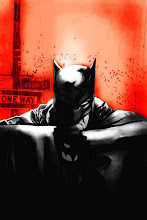
Now if that doesn’t sound like Bruce Wayne donning a cape and cowl, I don’t know what does.
The author finishes the chapter with a couple quick ideas about temporarily disguising cars and rooms.
 The next chapter is basically about acting. There’s a couple of important points here. Firstly, don’t try to pass yourself off as a member of any group that you are trying to infiltrate. There are just too many details and subtleties to trip you up. Instead be as different as possible and rely on their stereotypes to help your disguise. Secondly, learn to be quiet. It is an amateur mistake to give lots of made-up background. Don’t babble. Shut up. Be confident in your disguise. People don’t generally care about you and if they are asking it is probably just polite and they won’t expect concrete responses so don’t give them concrete response. The book quotes President Coolidge as saying, “If you don’t say anything, you won’t be called upon to repeat it,” and also, “I never got in trouble for anything I didn’t say.” But this has to be done with tact because if you only ask questions and never reveal anything about yourself (i.e. the character you are disguised as) then people will feel like you are interrogating them and grow distrustful. The solution: learn to flimflam. Small talk is super easy, and so is saying words without any meaning. All it takes is a little practice.
The penultimate chapter deals with makeup. Now I think that it is more than a little dated but you have to remember that the book is written by a man presumably talking to other men about makeup in the early 80s so you’ll have to excuse the fact that he is explicit about everything. To me the important things were 1) NEVER use stage makeup which is a definite common mistake amongst amateur men 2) blemish cover works fairly well to downplay beard shadow 3) with A LOT of work even ridiculous disguises can be pulled off with makeup and good acting. The book does have a section on using makeup to change the shape of your face but I have to reread it.
So that’s the book in a nutshell (it turned into a lengthy synopsis, oh well). Over the next little while, I’ll implement a practice routine for some of the exercises the book recommended and tell you how they go.